

Acquiring a home services business is a practical way to enter a stable, recession-resistant market driven by aging housing stock and ongoing repair needs. The process begins when you narrow down the specific niche you want to pursue, whether that’s HVAC, plumbing, roofing, or electrical, and source opportunities through brokers, direct outreach, and local connections.
After identifying a potential acquisition, the next step is to assess key factors such as cash flow, technician retention, customer base, equipment quality, and existing workload. From there, you move into negotiating the price and deal structure, often leveraging SBA loans and seller financing to reduce upfront capital requirements. A well-thought-out transition plan will help you maintain employees, retain customers, and ensure revenue continuity from the very start.
A digital shift and rising demand have combined to push trades and local firms into fast growth. The US home service market is projected to grow to USD 893.18 billion by 2032.
Annual expansion has drawn investors who see resilient returns from essential work. Many established operations report higher margins as recurring clients increase and scheduling becomes more efficient.
Modern platforms now handle bookings, dispatch, and payments on mobile devices. As more people use smartphones to find help, digital tools let companies scale operations and compete more broadly.
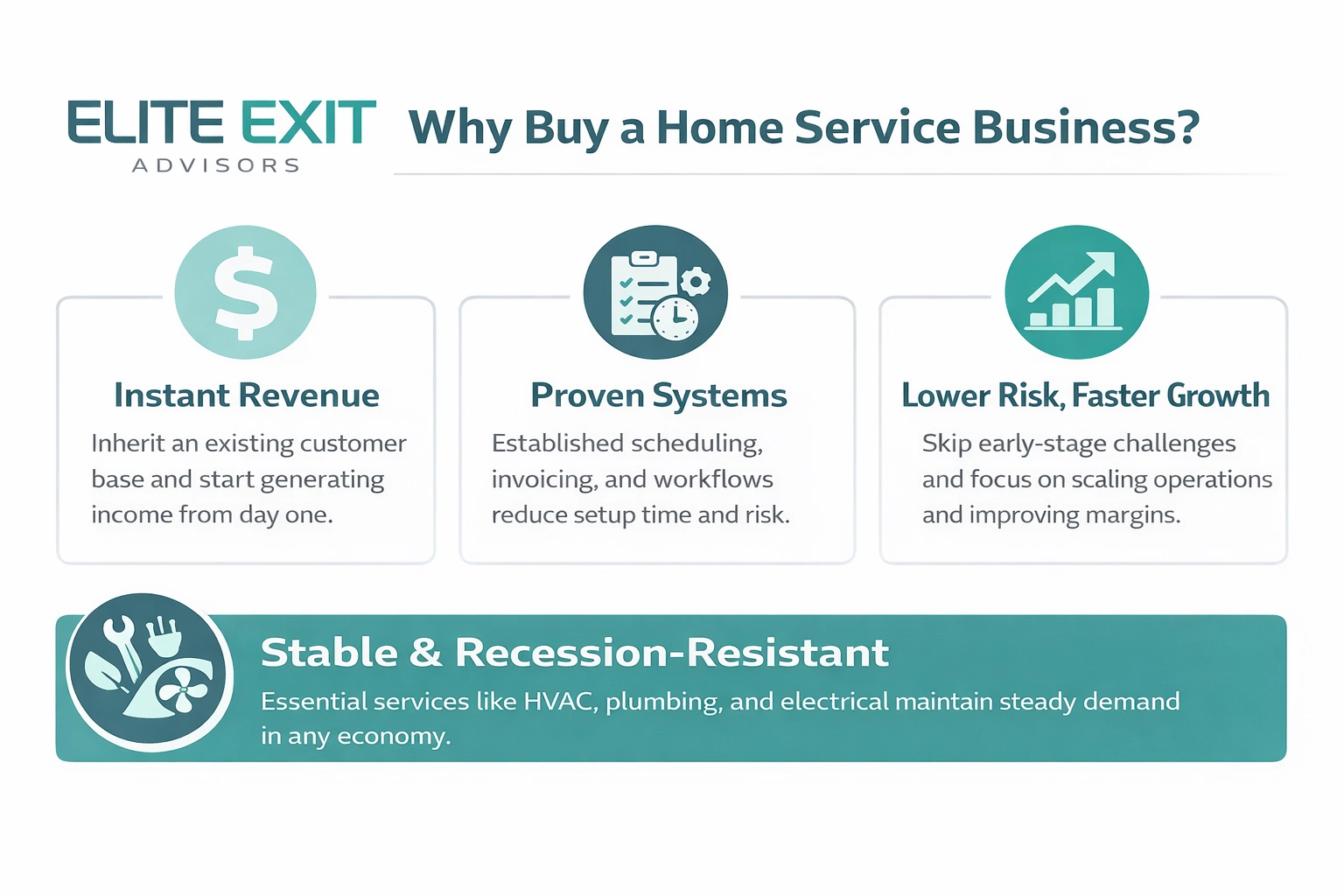
Taking over an established operation removes many early-stage risks and speeds time to profit. You inherit an existing customer base that already trusts the brand, which creates immediate revenue pathways.
Operational systems and processes come with the purchase. Scheduling, invoicing, and workflow routines are already proven, so you can focus on efficiency and margin improvement instead of building from scratch.
These firms attract private equity and strategic investors because of low startup capital needs and clear scaling levers. Many investors value recurring appointments and predictable cash flow.
Owning an established operation also lets you concentrate on optimization, improving margins, expanding territory, and deepening community impact. For many buyers, that combination delivers both financial upside and local influence.
Targeting the right trade lets you match skills, capital, and local demand for stronger returns. Focus on sectors where recurring jobs and urgent needs keep calendars full.
Plumbing and HVAC top the list for steady work. Homeowners prioritize repair and maintenance, so call volume stays consistent even in slow months.
Pest control, pool upkeep, and niche landscaping often yield higher margins. Some pest operations exceed six figures in revenue because of subscription models and repeat visits.
Roofing, foundation repair, and large remodels deliver high average ticket sizes. These projects raise annual revenue quickly but require more capital and scheduling lead time.
Assessing potential acquisitions starts with practical checks that reveal true operational strength.
Systems must be reliable. Review scheduling, dispatch, invoicing, and onboarding workflows. Robust systems signal that growth can scale without constant firefighting.
Seek companies with a clear path to recurring revenue. Subscriptions, maintenance plans, or repeat contracts reduce dependence on constant lead generation and smooth cash flow.
Confirm the firm meets local demand with consistent quality. Look at repeat rates, review patterns, and response times to judge how well the business serves homeowners.
Use these criteria to find companies that offer not just income, but real options for expansion and lasting success.
To start financial vetting, separate steady contracts from one-off projects; both tell different revenue stories. This step reveals whether revenue is predictable or volatile.
Compare gross margin, overhead, and net income to judge real profitability. High top-line revenue can hide poor margins when job costing is weak.
Audit financial records closely to avoid overpaying. Clear cost tracking and steady repeat income are the best indicators of long-term money-making potential.
Modern operations lean on digital tools to cut friction and speed field work. These platforms handle scheduling, dispatch, invoicing, and client records in one place.
Centralized systems like ServiceTitan let owners standardize workflows and reduce human error. Technicians access job history on tablets, which raises first‑visit success and shortens time on site.
Marketing automation ties campaigns to revenue. Teams track which ads or emails drive calls, so marketing spend goes to the highest-return channels.
Choosing the right mix of tools is strategic. Owners who integrate these systems can scale operations, manage staff more easily, and deliver a seamless experience that sets them apart.
Measure real customer demand in your area, this reveals whether repair or maintenance will sustain revenue.
Identify urgent needs homeowners face, such as plumbing or HVAC repair, burst water lines, and seasonal maintenance. Track call volume, online searches, and local forums to gauge true demand.
Map competitors and note which companies dominate local searches and referrals. A strong Google Business Profile or steady referral stream often signals a proven marketing engine.
Lawn care and landscaping are crowded, but they offer many upsell and subscription paths that lift average revenue per customer. Look for gaps where firms deliver faster response, higher quality, or niche expertise.
Staff strength and stability often determine whether operations run smoothly and clients stay loyal.
List current roles, average hours, and certifications. Note how many techs reach full productivity and how long that takes.
Structured onboarding reduces mistakes and speeds field readiness. Track time-to-productivity for new hires and update training when standards slip.
Workforce stability ties to daily operations. Good scheduling, fair pay, and reliable equipment keep crews engaged and improve service to homeowners.
Licensing and local rules shape how contractors operate and protect customers. For buyers, checking permits and records is mandatory to avoid fines and downtime.
Trade-specific credentials matter. Plumbing and HVAC require state or local licenses and often trade exams. Electrical and structural repair carry higher safety standards and frequent inspections.
Well-run home service companies keep written compliance processes. These documents reduce risk and show that the operation meets local code, insurance, and warranty expectations.
Strict adherence to rules signals a well-managed operation that prioritizes safety and long-term value.
Scalable operations let owners expand revenue without multiplying day-to-day headaches. With Technavio forecasting a 40.34% CAGR through 2028, the market offers strong potential for firms that can scale efficiently.
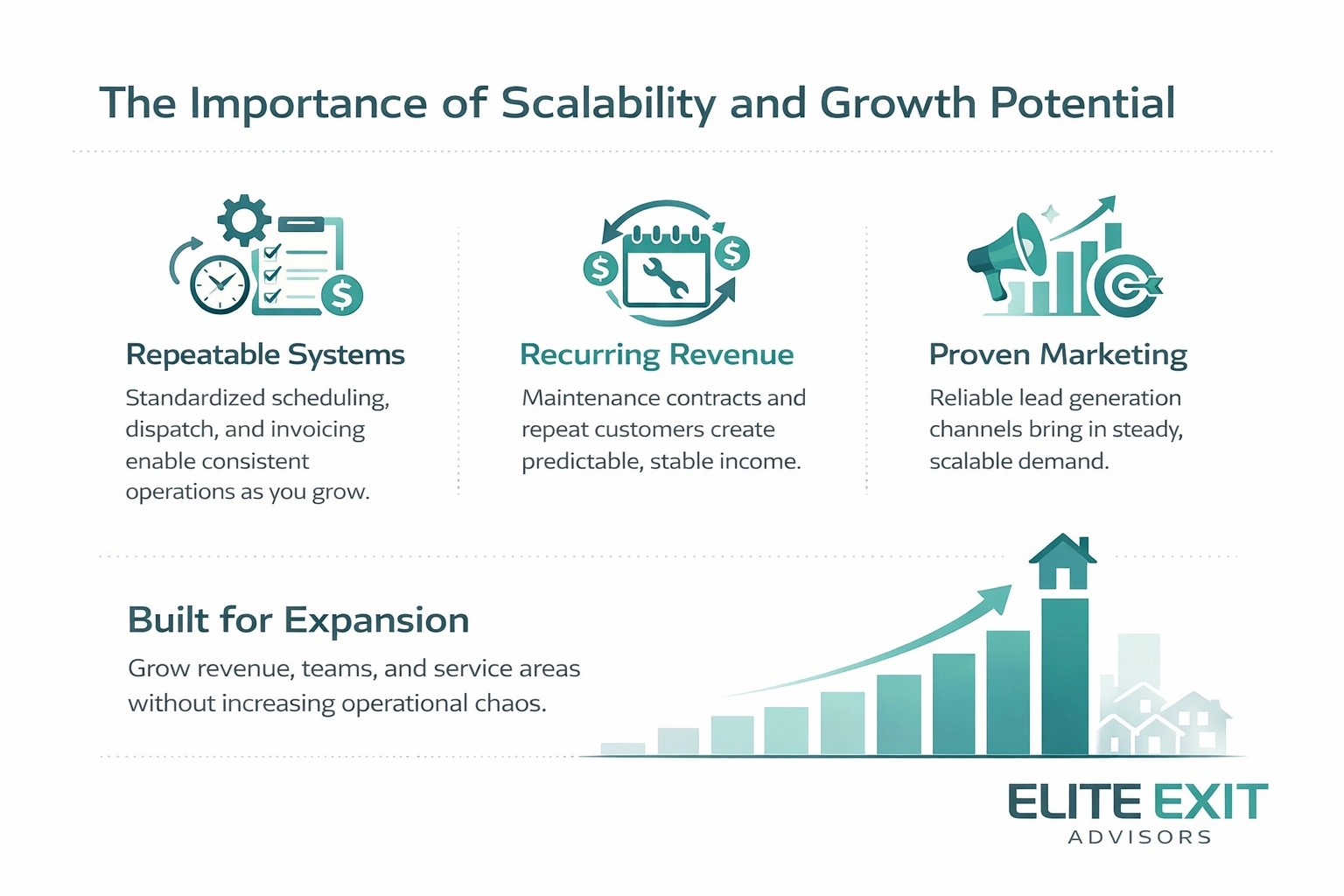
Scalability means growing capacity and revenue without a matching rise in complexity. That requires clear systems, repeat revenue streams, and reliable marketing that converts leads into customers.
Look for companies that already use documented processes for scheduling, dispatch, estimates, and invoicing. These systems allow owners to delegate and focus on strategic growth instead of constant firefighting.
Buying an operation with true scalability improves options for geographic rollout or future exit strategies. Prioritize companies with clear paths to recurring revenue, standardized workflows, and marketing that reliably drives demand.
Due diligence is the gatekeeper that separates promising deals from costly mistakes. This phase combines deep financial audits with hands-on operational inspections to verify claims and expose risks.
Verify revenue by cross-checking tax returns, bank statements, and signed customer contracts. Look for recurring income from maintenance plans and recurring services that show true stability.
Scan records for outstanding liabilities, payroll issues, and pending litigation that could erode value. An accurate picture of cash flow and margins sets realistic expectations for future potential.
Inspect tools, plumbing gear, HVAC units, and fleet vehicles for wear and compliance. Equipment condition affects job quality, safety, and repair costs over time.
Interview key employees to assess culture, retention, and on-the-ground knowledge. Validate customer lists and sample recent jobs to confirm demand and repeat clients among homeowners.
Designing terms around milestones helps preserve cash while rewarding real progress. Start with clear payment triggers tied to measurable revenue or retention targets to align seller and buyer incentives.
Include an earn-out provision that pays part of the price only if agreed revenue goals are met. This protects funds and proves future potential without overpaying upfront.
Spell out resources the new owner needs to sustain systems and growth. The agreement should require transfer of documentation, software access, and training hours to keep operations steady.
Protect customer relationships and key staff with explicit retention terms. Retention clauses and transitional support keep repeat clients and reduce churn during ownership change.
Use experienced advisors for valuation and contract drafting. The right structure saves money over time and opens options for future growth.
Smooth ownership transitions keep loyal customers and steady revenue intact. Start with clear, timely communication that tells clients what to expect and why continuity matters.
Ask the previous owner to introduce you to key accounts and to ride along on first visits. That handoff builds trust and reduces friction.
For lawn care and landscaping, keep schedules consistent. Regular appointments reassure homeowners and prevent cancellations.
Focus on customer satisfaction and clear handoffs to protect short-term revenue and unlock long-term potential for the companies you acquire.
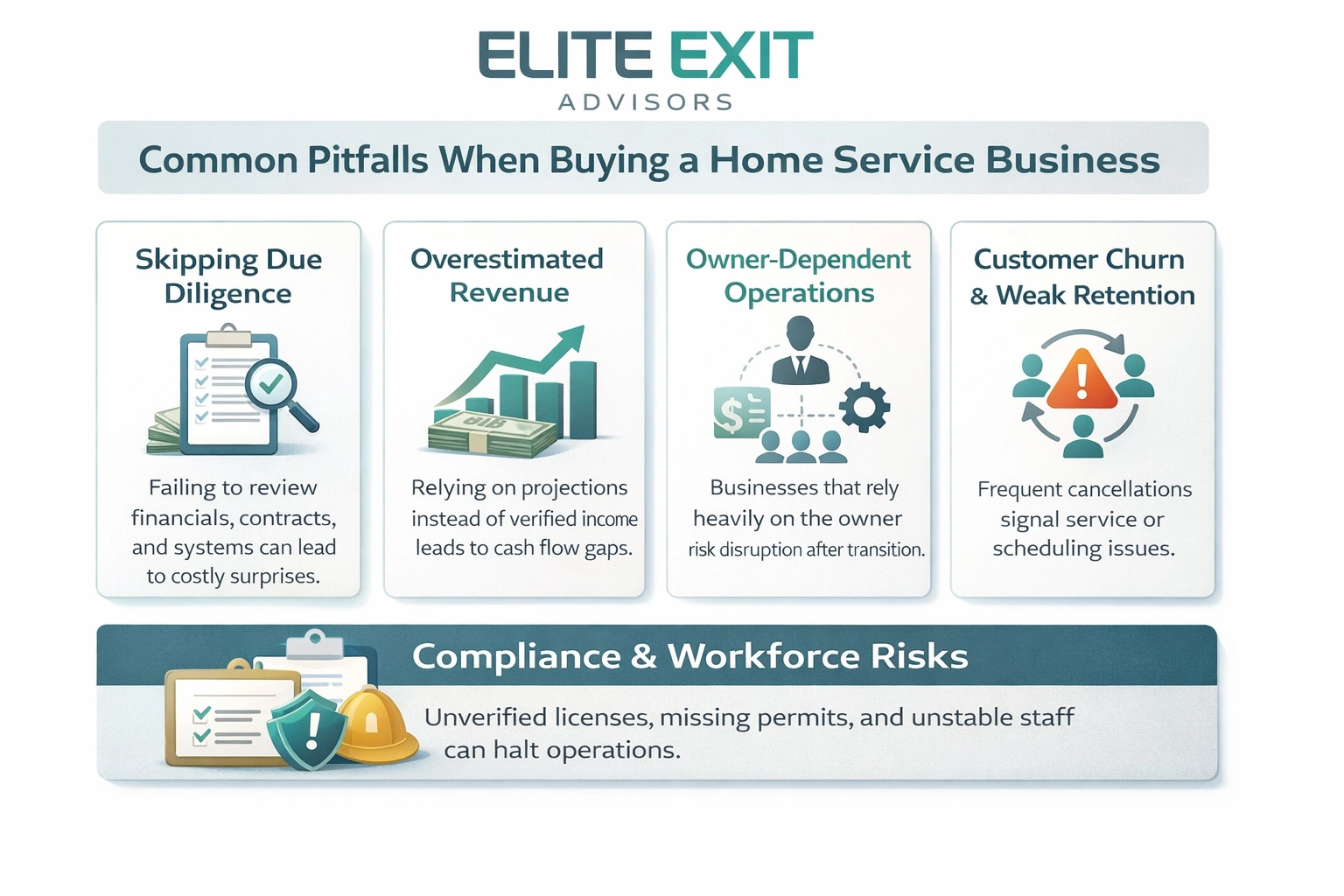
Skipping key checks during acquisition can turn a promising deal into a costly mistake. Conduct thorough due diligence on financials, contracts, and operational systems before committing.
Overestimating potential revenue is frequent. Verify income streams with bank records and independent audits rather than projections. That prevents surprise shortfalls after closing.
Workforce dependence on the prior owner is risky. High staff turnover or missing certifications hurts continuity for plumbing, HVAC, and lawn care operations. Make retention plans part of the deal.
Spot these problems early, you protect income and preserve long-term potential for the services you acquire. Focus on facts, not assumptions, to make informed decisions.
Expert advisors can turn complex exits into clear, executable plans that protect value and cut risk. Elite Exit Advisors specialize in exit strategy, valuation, and transition planning for firms in the home service sector.
The team offers precise valuation work to reveal true potential and current revenue capacity. That clarity helps sellers set realistic price targets and helps buyers assess long-term returns.
Elite Exit Advisors bring a proven track record across the home service market. Their structured support minimizes risk and preserves customer continuity during ownership change.
Book a call to discuss acquisition or exit goals and get tailored next steps from seasoned advisors.
The true test begins at handoff: customers, crews, and processes decide long-term success.
Buying an operation is a major commitment that offers clear potential when paired with solid planning. Focus on essentials such as water treatment and lawn care to build steady revenue and trust.
Track the average ticket and scalability early. These metrics reveal whether the company can grow without breaking systems.
Watch market trends for the coming year and stay adaptable to customer needs. With the right strategy, expert guidance, and operational focus, the potential for lasting results is strong.
We hope this guide gave you clarity and confidence to move forward with purpose.