

Buyer-side advisory is protection, not a perk. In complex deals, disciplined representation keeps a company acquisition focused on real value. Serious buyers rely on counsel to avoid overpaying and to spot hidden risks before signing.
Sell-side teams shape the narrative and control what the market sees. That imbalance makes it easy to misread projections or accept one-sided terms. A dedicated advisor pressure-tests assumptions and brings structure to diligence.
The primary goal is simple: secure the best risk-adjusted investment outcome for your business. Advisors manage diligence, sharpen negotiation levers, and defend downside protections while preserving deal momentum.
Most transactions start with the seller setting the tone and revealing selective information. That opening shapes expectations, timelines, and what gets prioritized in diligence.
Buy-side teams allocate capital and live with the outcome. They assess integration, long-term performance risk, and how an acquisition will convert to cash.
Sell-side advisors package the opportunity, emphasize upside, and time disclosures to maintain leverage. Sellers often own the data room and choose what comes out first.
Price discovery diverges: sellers push headline valuations while buyers test downside scenarios and quality of earnings. Information asymmetry appears in customer concentration, churn, one-time revenue, and margin sustainability.
Practical response: appointing focused buy-side representation restores balance, clarifies risks, and improves decision quality.
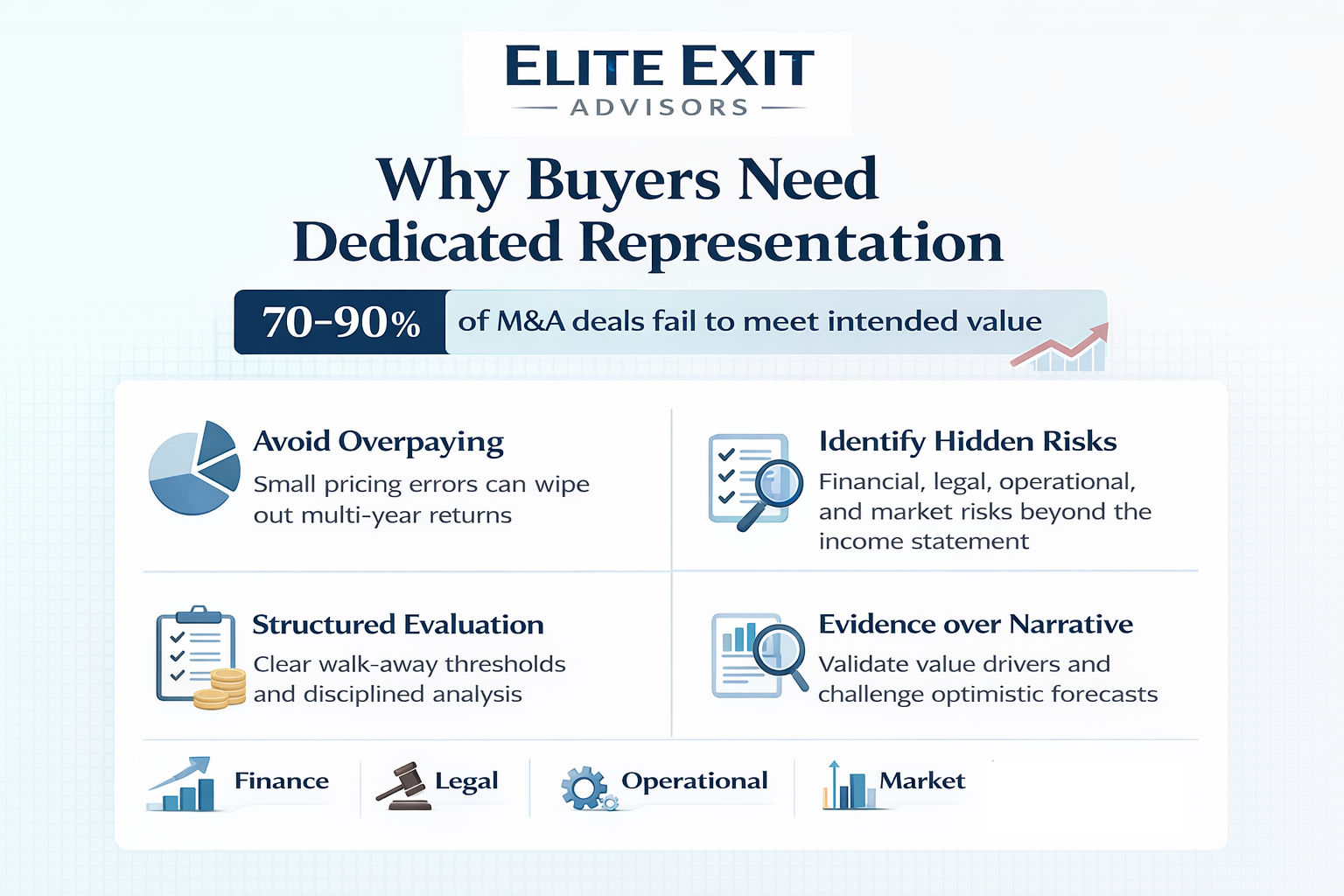
When capital is at stake, experienced representation turns speculation into disciplined analysis. Between 70%–90% of M&A deals fail to meet their intended value, often due to overpayment, unrealistic assumptions, or missed risks. Representation exists to protect investors from paying for performance that never arrives. The priority is clarity: define what the acquisition must deliver and what would force a walk-away.
Small pricing errors compound quickly. A 10% premium on price can wipe out a multi-year return if revenue falls short of projections.
Advisors quantify required future performance and align purchase value to realistic milestones before any signature.
Risk lives beyond the income statement: customer concentration, pricing power erosion, working-capital traps, and system bottlenecks.
First-pass materials often omit contingent liabilities and one-off revenue. Robust due diligence finds those gaps.
Representation creates a structured evaluation path, defines walk-away thresholds, and records core assumptions.
Advisors separate narrative from evidence, as they validate value drivers and challenge optimistic forecasts. That reduces long-term exposure and aligns the deal with the strategic goal.
A disciplined acquisition team converts noisy market activity into a ranked set of vetted opportunities. The advisor’s role is to create clarity, enforce discipline, manage risk, and protect decision quality from first contact through close.
Market mapping is targeted, not scattershot. Advisors prioritize strategic fit over chasing every listing or brokered teaser.
This saves time and focuses effort on leads with the best chance of delivering value.
Qualification uses a short, repeatable screen: strategic fit, core value drivers, integration complexity, and clear no-go triggers.
That structured filter preserves resources and stops deals that fail basic criteria early in the process.
Modeling tests revenue, margins, working capital, and capex assumptions. Advisors tie price to verifiable cash flows.
Challenging optimistic forecasts ensures the proposed purchase reflects realistic future performance.
Process leadership sets timelines, controls communications, and prevents rushed exclusivity. Advisors coordinate external experts so the team moves in step.
At close, advisors negotiate final terms, track open items, and make sure diligence findings become enforceable protections.
Their job is to preserve leverage and decision quality across the transaction process so the outcome matches the buyer’s investment objectives.
Due diligence separates confident investments from costly surprises. In practice, it means getting under the hood before committing capital, like inspecting a used car to avoid hidden problems. The two approaches share methods but differ in purpose and incentives.
Buy-side diligence verifies revenue quality, margin drivers, customer retention, compliance, and scalability. Teams build independent forecasts and sensitivity tests to model downside scenarios.
Findings drive protective measures: price adjustments, working-capital targets, escrows, indemnities, and earnouts.
Sell-side due diligence organizes records, clarifies accounting adjustments, and resolves issues before marketing. The goal is to reduce buyer uncertainty and support a higher valuation.
Concrete discovery becomes negotiation leverage. Material gaps may cut the offer, trigger reps and warranties, or create escrow holdbacks.
Clear evidence lets an investor convert risk into economic terms rather than vague concerns.
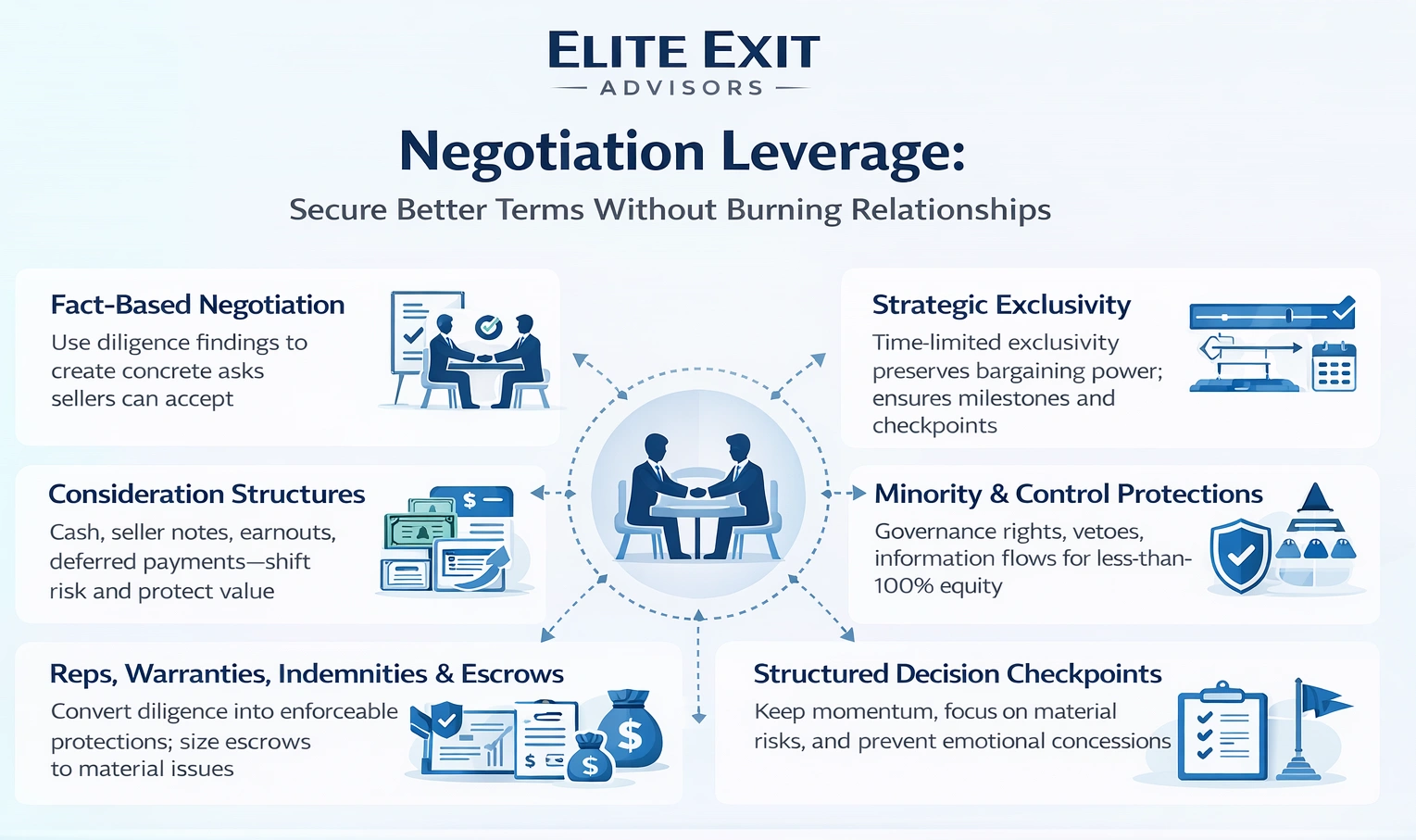
Negotiation power grows from documented facts and a clear process, not from posturing. A disciplined approach turns diligence findings into concrete asks that sellers can accept without feeling attacked.
Exclusivity buys time to finish targeted due diligence and lock in momentum. Grant it only after you secure timely data access and clear milestones.
Too-early exclusivity hands leverage to sellers. Time-limited windows with progress checkpoints preserve bargaining power and keep the process honest.
Mixing cash with seller notes or earnouts shifts risk back to the sellers when revenue quality is uncertain.
Earnouts tied to measurable metrics protect value and align incentives. Deferred payments can support post-close integration without raising headline price.
When taking less than full equity, secure governance rights, information flows, and vetoes on major actions.
Contractual liquidity plans and clear exit mechanics avoid future disputes and protect downside value.
Reps and warranties convert diligence into enforceable promises. Indemnities and escrows provide cash remedies for discovered breaches.
Size escrows to the material issues uncovered in diligence rather than using blunt discounts. That preserves relationship goodwill while capping downside.
Advisors on each side of a transaction answer to very different incentives, and that shapes every process choice. Understanding those interests explains why representation matters and what each party is trying to achieve.
Sell side teams and sell-side m&a advisors earn fees tied to closing value. Their role is to market the asset, create competition, and push headline pricing.
Materials stress upside, present attractive metrics, and compress timelines to preserve leverage for sellers.
Buy side representation prioritizes durable value, downside protection, and realistic returns on investment. Advisors validate cash flow durability, integration risk, and probability-weighted outcomes.
That focus reduces the investor’s interest in paying for speculative upside and enforces evidence-based decisions.
These differences buy-side sell-side explain common conflicts: pressure to move fast, limited diligence, or seller-friendly terms. Representation exists to rebalance the process so buyers avoid irreversible investment mistakes.
A focused acquisition playbook helps teams move quickly when merit is clear and pause when risks are unresolved.
Elite Exit Advisors acts as a dedicated partner for businesses pursuing acquisitions. We evaluate opportunities, validate the integrity of an investment, manage due diligence across workstreams, and improve outcomes, as we control the transaction process and structure buyer-favorable terms.
We also convert diligence findings into better terms, earnouts, escrows, indemnities, and governance, while keeping parties involved aligned and momentum steady.
Elite Exit Advisors helps businesses install decision discipline and deal protection by:
Ready to discuss a current or upcoming deal? Book a call to review fit assessment, diligence strategy, and buyer-favorable structuring with our team.
When deals close poorly, the root cause is often an imbalance in information and incentives. That buy-side sell-side gap changes pricing, leverage, and outcomes across transactions.
The core difference buy-side sell-side is simple: one side markets value, the other must verify it. For any business pursuing an acquisition, disciplined verification and clear decision rules matter more than optimism.
Due diligence and repeatable process turn assertions into evidence. The goal is risk-adjusted value, pay the right price, map downside, and secure protections that match real risk.
Integrate diligence with negotiation so facts become enforceable protections, not just reports. Ready to evaluate a target, build a diligence plan, and negotiate buyer-favorable terms? Book a call with Elite Exit Advisors to discuss your business and next investment steps.